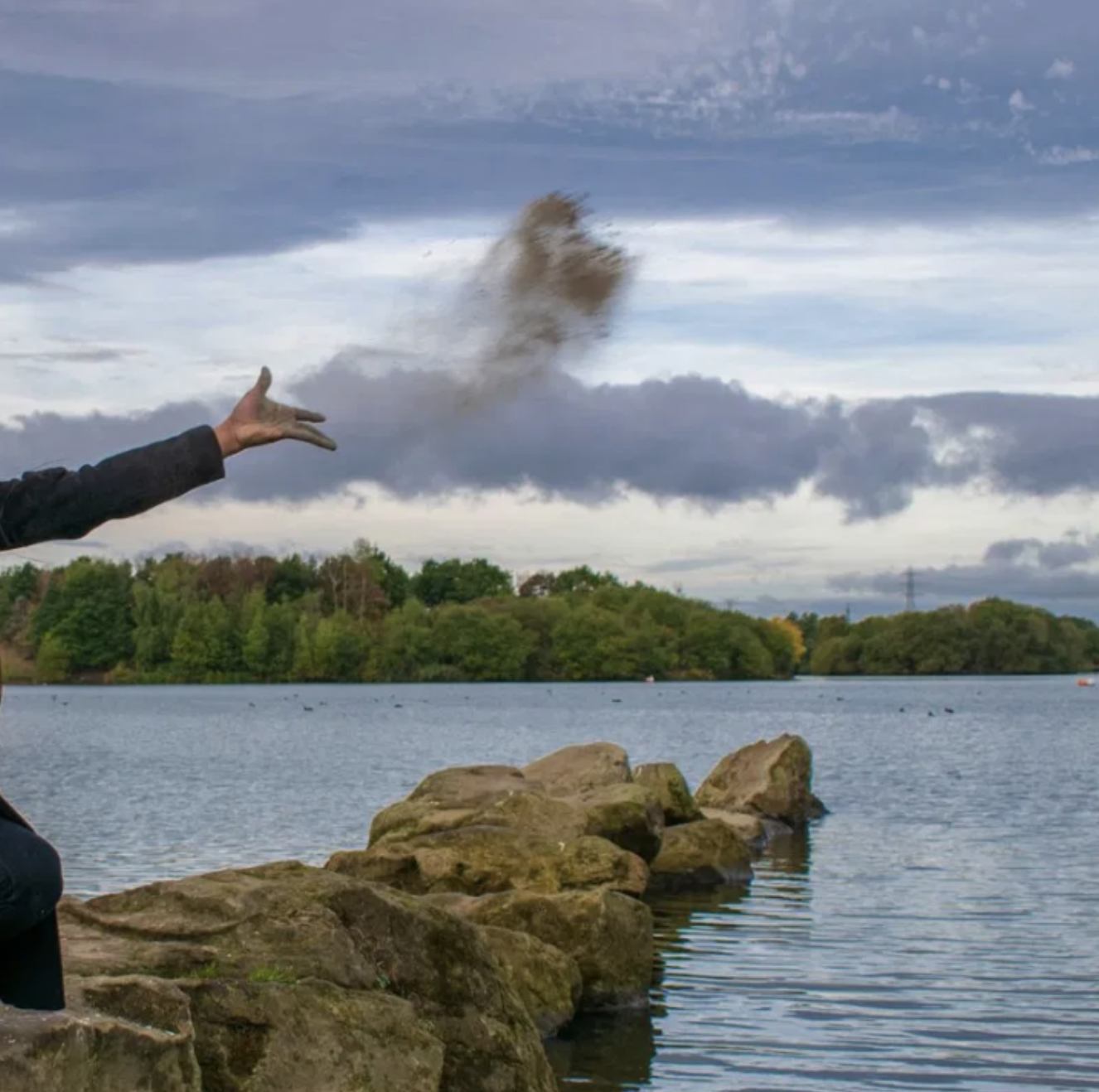
A Scottish view can hold a lifetime in a single breath: heathered hills, a river’s bright ribbon, a stone wall that looks as if it has always been there. It’s no surprise that families return to these landscapes when they’re trying to say goodbye.
I was reading an article published on Scattering Ashes UK that highlights a hard truth: some of Scotland’s beloved beauty spots are being left “unsightly” not by the act of scattering itself, but by dumping cremated remains in visible piles. Sometimes with items left beside them. In the Scottish Borders, community members described ashes becoming “sludgy,” children asking what they are, and dogs sniffing around, an experience that can feel jarring, upsetting, and undignified for everyone present.
This isn’t a post about shaming grieving families. It’s about protecting the places we love and protecting the meaning families are trying to create.
The problem isn’t remembrance. It’s visibility and avoidable harm.
The article makes an important distinction: scattering is “throw in various random directions.” Dumping is tipping an urn into a single mound.
When ashes are left in a pile, they become noticeable. In wet weather they can turn heavy and “sludgy.” They can disturb other visitors and families, invite hard questions from children who stumble upon them, and attract animals. They can also create a sense that a shared landscape has been marked in a way others didn’t consent to. And for the family who meant well, the moment can quickly become panicked, trying to rake ashes with a stick, shuffle them with shoes, or leave quickly hoping no one noticed.
That’s not the farewell anyone intended.
Why does dumping happen? Grief, haste, and a lack of guidance.
One of the most compassionate parts of the article is its explanation of why this happens. It points to what it calls “grief haze.” That foggy, disorienting stretch after loss when you’re functioning, but not thinking clearly. It also names a lack of planning: most families have never done this before, and there isn’t always a professional guiding the moment the way there often is at a funeral. Add in uncertainty about what’s “right,” and people can default to what feels simplest, until they see the impact.
In other words: people don’t set out to make a beautiful place worse. They set out to do something meaningful and they need better support.
A better standard for Scotland: discreet, respectful, and permission-led
Scotland’s landscapes are powerful because they’re shared: walkers, locals, tourists, children, dogs, and families carrying their own stories. If we want scattering to remain a tender, accepted practice, we need a higher standard, one that centers discretion, consent, environmental care, and a plan.
The simplest advice from the article is also the most important: scatter, don’t dump.
What “scatter” can look like (in practice)
Scattering well is less about perfection and more about thoughtfulness. It means choosing a location with care, considering visibility and foot traffic, and understanding whether a place is managed or privately held. It means checking permission requirements where needed, deciding on a method that avoids a single pile, and paying attention to weather and wind so the moment stays dignified for everyone present. It also means leaving no trace. That means no objects left behind that could distress others or become litter.
This isn’t about making the moment clinical. It’s about making it peaceful.
At Pollen, we believe a farewell can be both meaningful and responsible
At Pollen, we approach cremated remains scattering in Scotland as a guided, historically grounded, and deeply human ritual, not a quick task to complete. For families with Scottish connections (by heritage, memory, or longing), we help turn scattering into something that feels like a final journey, shaped by place and held with care.
We handle secure courier transport and careful custody, and we store remains in The Hiveuntil the next scheduled ceremony. We plan around place, timing, discretion, and the realities of Scotland’s weather, and we carry out monthly scattering ceremonies in locations chosen for their cultural, historical, and often personal resonance.
The aim is simple: to create a farewell that feels true, while ensuring the landscape remains unburdened.
How Pollen helps families in the US care for Scotland from afar
Many of the families we speak with are in the United States. They carry Scotland in their stories. Through ancestry, a parent’s childhood village, a honeymoon, a favorite loch, a long-held promise, you name it. But travel isn’t always possible. And even when it is, scattering can be surprisingly hard to do well in the moment, especially when grief is fresh, the wind is unpredictable, or you or your clients are unsure what permissions you need.
Pollen exists for this exact gap: to help families honor a Scottish connection without unintentionally harming the land they love. When we take on the planning and the method, we remove the last-minute uncertainty that leads to visible dumping. We help families avoid the pressure of choosing the easiest, busiest spot, and instead focus on places where a discreet scattering can happen with care. We ensure nothing is left behind, and we approach the act as stewardship as much as ceremony, so Scotland remains beautiful for the next family who arrives with their own grief.
Because the goal isn’t to leave someone behind in Scotland. It’s to let Scotland carry them quietly, respectfully, and without burdening the people who come after.
If you’re a funeral professional or crematorium manager: guidance helps families do the right thing
The article notes that local community members wrote to a crematorium asking for guidance notes to be issued to mourners. That’s a practical, compassionate intervention.
In death care, small guidance can prevent big harm. A simple, plain-language scattering guide, a short checklist, and a reminder about discretion and permission can help families feel steady in a moment that often feels anything but. When families are supported, the landscape is protected and the farewell becomes what it was meant to be.
Closing thought
Most people don’t want their last wish to be: “Take me somewhere beautiful and make it worse.” They want beauty because they want meaning.
With a little planning, and a little guidance, we can keep Scotland’s beauty spots sacred for everyone, while still giving families a place to love, remember, and release.
If you’re in the US and you or your clients are holding a Scottish connection you’d like to honor from afar, I’m happy to talk through options—gently, privately, and without pressure.